
On this page
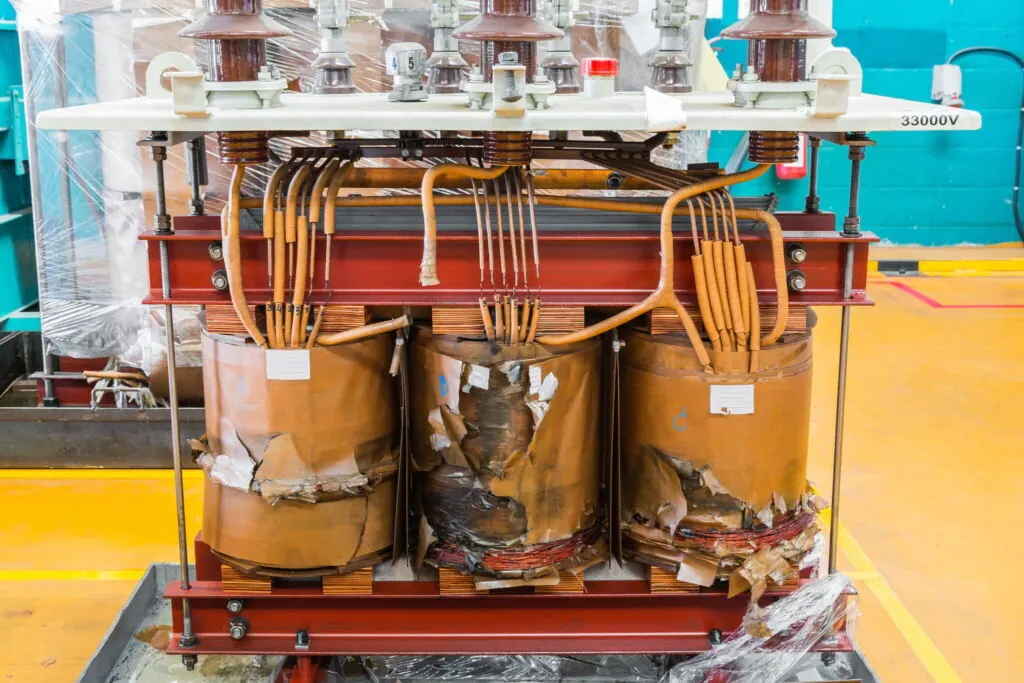
If a transformer on your site failed tomorrow, the warning may already be in your files: an oil test result, a temperature log, an alarm, an inspection note. In the failures we investigate, the warning looks different each time: gases rising in the oil, a winding running hotter than its load explains, moisture creeping up from one oil test to the next, a hot spot on a thermal scan, a gas relay alarm that keeps coming back. What keeps coming back is that the warning was written down long before the failure, and nobody trended it, connected it to the rest or acted on it.
A transformer rarely fails without warning. It warns on paper first.
1. Why the warning is missed
- Results are filed, not trended. Each test is checked against a limit and put away. A result inside the limit but rising fast looks fine on its own.
- Each test is read alone. The oil says one thing, the temperatures another, an alarm a third. Nobody puts them side by side.
- Ownership is split. Operations, maintenance, a testing contractor and the utility each hold part of the picture, and nobody holds all of it.
- Alarms are reset, not explained. A gas relay or temperature alarm is cleared, and the reason is never found.
- The history leaves with the contractor. A change of maintenance firm or owner, and the earlier results are lost.
- “It has always run hot.” A slow change becomes normal, and the baseline drifts with it.
None of these is a failure of equipment. Each is a failure to read what the equipment was already saying.
2. What it costs when the warning is missed
- The outage is long. Large transformers are built to order, and replacements now take a year or more to arrive, longer for the largest units. A failure without a spare is not a repair; it is a wait.
- The damage spreads. A transformer that fails violently can take its bushings, the switchgear beside it and sometimes the building with it.
- The claim is harder. Without the records, it is difficult to show whether a loss was a sudden breakdown or the end of a long decline, and whether another party shares the responsibility. The questions stay open, and so does the claim.
- The evidence disappears. What is cleaned up, drained or scrapped in the first days after a failure cannot be examined later.
3. What changes when the warning is read
For an owner or operator, a change is seen months before it becomes a failure. The outage is planned, not forced. The repair is made on the owner’s schedule, or a replacement is ordered while there is still time for it to arrive. The unit’s history is in one place, and it moves with the site when a contractor or an owner changes.
For an insurer or risk engineer, the file speaks for the unit. At renewal, the records show a maintained asset. After a loss, they show when a problem began and how it developed, which is what coverage, recovery and subrogation decisions turn on.
For both, the failure that does happen is easier to explain, because the evidence was kept.
4. When a transformer has already failed
The first days decide much of what can be established later. Mission Critical Forensics™ investigates failures of high-, medium- and low-voltage transformers of every type and size, for insurers, adjusters, subrogation and coverage counsel, utilities and facility owners. We look at the whole power system, not only the unit that failed, and at the unit’s whole life, from its specification to the day it failed. Every investigation is led by our principal forensic engineer, who interprets the evidence and signs the report. Independent findings, with expert testimony when required. Transformer failure investigation.
Frequently asked questions
Is a result inside the limit safe?
Not always. A result inside the limit but rising fast, or moving with other readings, can be the warning.
Does a good maintenance record help a claim?
It helps establish what the unit’s condition was and when a problem began, which is what a claim turns on. (How long to keep evidence after a failure.)
Does an oil test tell you why a transformer failed?
No. It shows that something was wrong and what kind of fault it may have been, not where, when or why. (What oil gas analysis can and cannot show.)
Who investigates a transformer failure?
A forensic engineer with transformer, protection and power system expertise, independent of the maker, the installer and the maintenance contractor.
Have a complex loss to investigate?
Contact Mission Critical Forensics to discuss the file.
Send an AssignmentRelated Posts
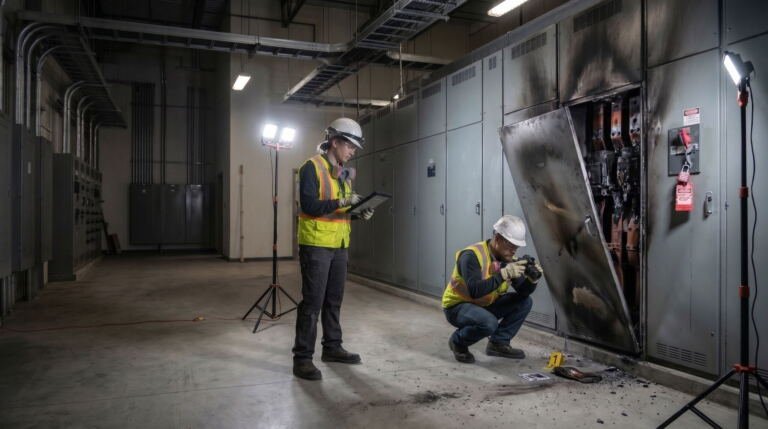
What Is an Arcing Event, and Why Is Its Cause So Hard to Find?
A plain-language guide to arc flash, arc blast and slow arcing faults for insurers, adjusters, counsel and facility owners, and…
Read More »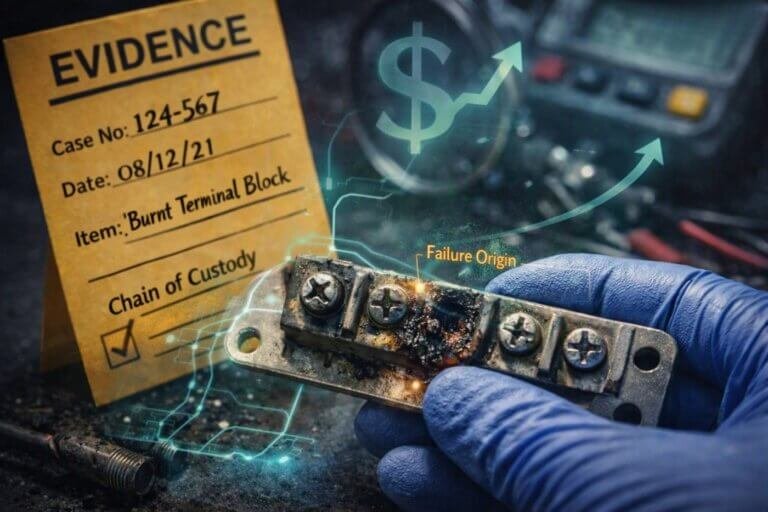
Don’t Leave Money on the Table — Subrogation in Complex Technical Losses
Subrogation is one of the most effective tools insurers have to reduce leakage — yet in complex technical losses, the…
Read More »
What DGA Doesn’t Tell You
Dissolved Gas Analysis tells you a transformer has a fault. It will not tell you where it started, when, what…
Read More »