Analyzing Critical Power Infrastructure:
Determining Why Arc Flash Happened
Electrical failure analysis · Switchgear
Switchgear, power system and protection & control specialists, investigating failures across Canada.
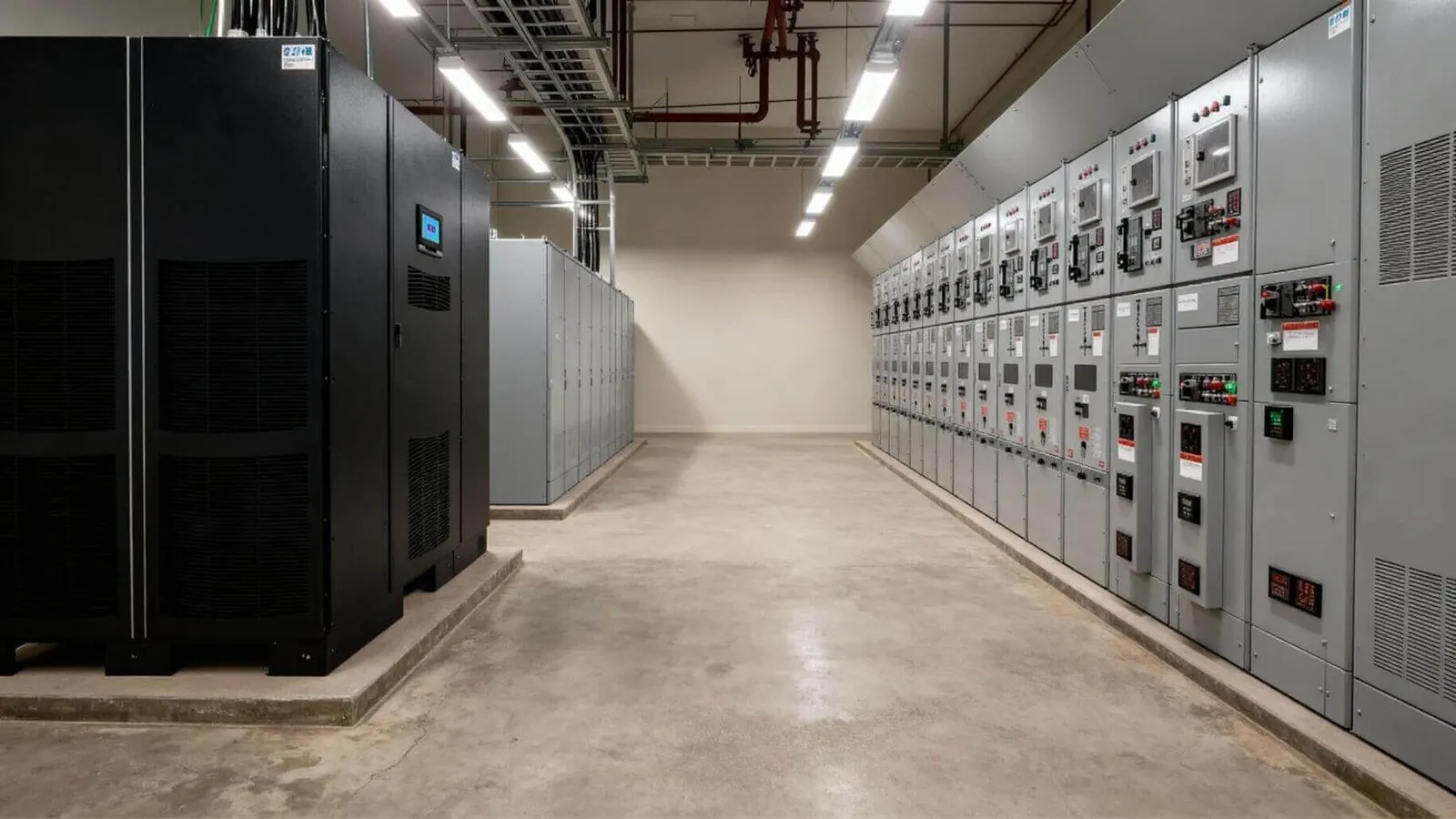
Switchgear is the nerve center of any facility’s electrical distribution system. When it fails, the consequences can be catastrophic, leading to extensive downtime, significant financial loss, and serious safety hazards. Mission Critical Forensics, headquartered in the heart of Toronto, provides expert, evidence-based investigation to determine the precise root cause of switchgear failures for clients across Canada.
Our investigations have included catastrophic arc flash events at main electrical distribution switchboards, providing us with the deep expertise required for your most complex cases. We analyze the evidence to deliver definitive conclusions that inform insurance claims, subrogation and strategies to prevent recurrence.
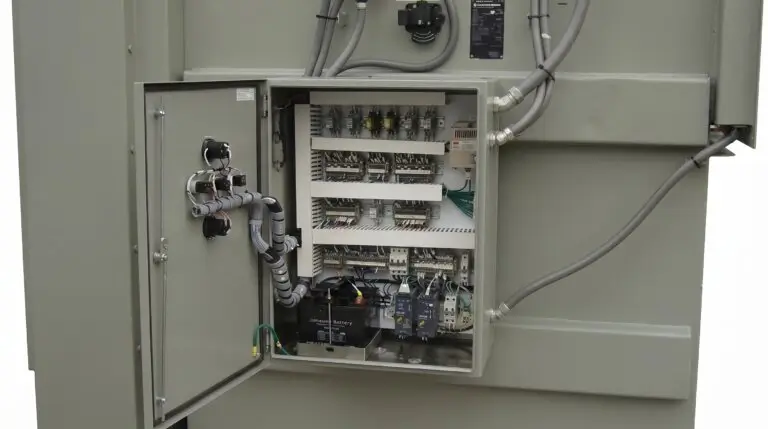
We are specialists in switchgear, electrical power systems and protection and control (P&C). Low-, medium- and high-voltage switchgear, switchboards, circuit breakers, protective relays and the protection schemes that bind them together are our daily work, and we know how they fail, how they should have protected each other, and what the evidence of a failure looks like.
01
Switchgear & P&C specialists
Power systems, protection and control
02
Systemic
The whole power system, not one component
03
Independent and defensible
Evidence-based findings and expert testimony
04
Arcing Event Specialists
Catastrophic events at main switchboards
05
Cause, traced to its source
The evidence subrogation and disputes depend on
The challenge
A switchgear failure happens in a fraction of a second, and the cause can sit anywhere in the power system around it. Reading it correctly takes specialists in switchgear and protection and control, and that is what we are.
Insulation breakdown, a failing connection, contamination or moisture, a foreign object, an operating error, a protection failure: a catastrophic arcing event can begin in many ways, and the destruction it leaves makes them look alike. Pinpointing the true root cause takes analysis, never assumption.
The answer has to be an evidence-based sequence of events: what happened first, what followed, and why the system did not stop it. We build that sequence systematically and test every possible cause against the evidence, ruling each one in or out.
An arcing event rarely involves one component. The switchgear, its circuit breakers, the protective relays, the upstream supply and the loads downstream all play a part, and each has to be understood in relation to the others.
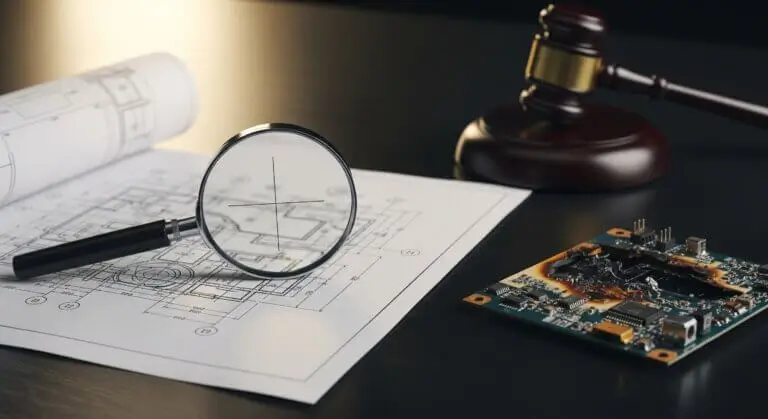
Relay and event logs, single-line diagrams, protection coordination studies, the status of every overcurrent protective device, OEM manuals, maintenance records and the operators’ own accounts each hold part of the answer. Interpreting them together takes power system and protection and control expertise.
Manufacturers, installers, contractors, operators and utilities each see the failure from their side, and each may carry liability. The answer has to come from an engineer who answers to the evidence alone, and it has to hold up when insurers, counsel and courts test it.
Capability
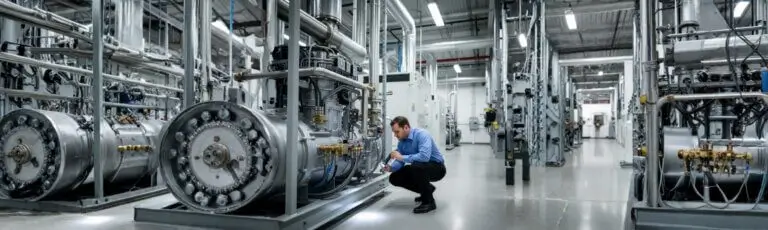
All complex loss investigations are handled by our team of experienced forensic experts, led by our Principal Engineer, Alicia Yan, P.Eng., CFEI.
Our expertise spans the full spectrum of electrical systems, allowing us to conduct thorough forensic analysis on failures in low, medium, and high-voltage switchgear.
Our investigations cover failures in circuit breakers, protective relays, and associated control systems. We determine if the failure was caused by a component defect, improper settings, lack of maintenance, or other contributing factors.
We meticulously investigate the cause and origin of arc flash incidents. Our analysis identifies the sequence of events leading to the failure, assessing factors such as equipment condition, maintenance procedures, and protective device coordination to determine why the event occurred.
When you require an unbiased, expert opinion, the qualifications of your engineering partner matter.
An investigation that ends with the cause “undetermined” leaves the claim unresolved. Our technical expertise and holistic approach, which examines the whole system around the failure rather than one component, take each investigation to the bottom of the issue: a definitive root cause.
A switchgear failure is rarely one party’s problem: manufacturers, installers, contractors, operators and utilities can all be involved. Determining the true root cause, and tracing it to the product, work or operation it came from, gives insurers and counsel the independent technical foundation that loss recovery and subrogation claims depend on. It is what we do best.
As an independent engineering firm, our only objective is to find the scientific truth. Our findings are unbiased and based solely on evidence, making them credible for insurance claims and legal proceedings.
Our team possesses a deep understanding of electrical, chemical, and mechanical engineering principles as they apply to switchgear and its failure modes.
Our reports are written to be clear, concise, and defensible. They are structured to withstand the scrutiny of technical and non-technical stakeholders alike.
Questions
It is the forensic engineering work that establishes why switchgear failed, and proves it. When an arc flash tears through a switchboard, a circuit breaker fails to trip or a protective relay misoperates, a forensic electrical engineer determines the origin and cause, the sequence of events, why the protection did or did not clear the fault, and which component, installation or maintenance action it traces to, with findings that hold up for an insurer, a lawyer or a court. Mission Critical Forensics investigates switchgear failures, arc flash and arc blast incidents, circuit breaker failures, protective relay misoperations, bus faults, ground faults and protection and control (P&C) failures, in low-, medium- and high-voltage switchgear, switchboards, motor control centres and bus duct, across Canada.
A forensic electrical engineer with switchgear and protection and control expertise. Mission Critical Forensics (MCF) investigates arc flash and arc blast incidents across Canada, from main distribution switchboards to medium-voltage switchgear, and establishes where the fault began, how it developed, and why the protection did or did not stop it.
That is the question at the centre of most switchgear claims. The answer can lie in the breaker, the relay, its settings, the trip circuit, control power or the coordination between devices, and often in more than one of them. Establishing which, with evidence, is a protection and control investigation, and it frequently decides liability.
Because an arc flash is rarely the failure of one part. It involves the switchgear itself, the protection that should have cleared the fault, the coordination between devices, and how the equipment was operated and maintained. An engineer who understands the whole power system can establish how the fault started and why the protection did or did not stop it, rather than stopping at the section that burned.
As soon as the failure happens, and before the switchgear is repaired, replaced or cleaned up. Evidence lost in the first days cannot be recovered, and it often decides the claim.
Yes. We are frequently retained to provide impartial, third-party engineering analysis for insurance claims, warranty claims, subrogation and litigation. Our engineers can serve as expert witnesses when required.
Low-, medium- and high-voltage switchgear, including metal-clad and metal-enclosed switchgear, main distribution switchboards, panelboards, motor control centres and bus duct; air, vacuum and SF6 circuit breakers; protective relays and the protection and control schemes, settings and coordination behind them.
Insurers and adjusters, subrogation and defence counsel, utilities, and the owners and operators of industrial, commercial and data centre facilities.
From the Forensic Engineer’s Desk

We use necessary cookies to operate the site. With your consent, we use Google Analytics to understand how pages are used. We do not use advertising cookies.
NecessaryRemembers your choice and protects our forms.Always on