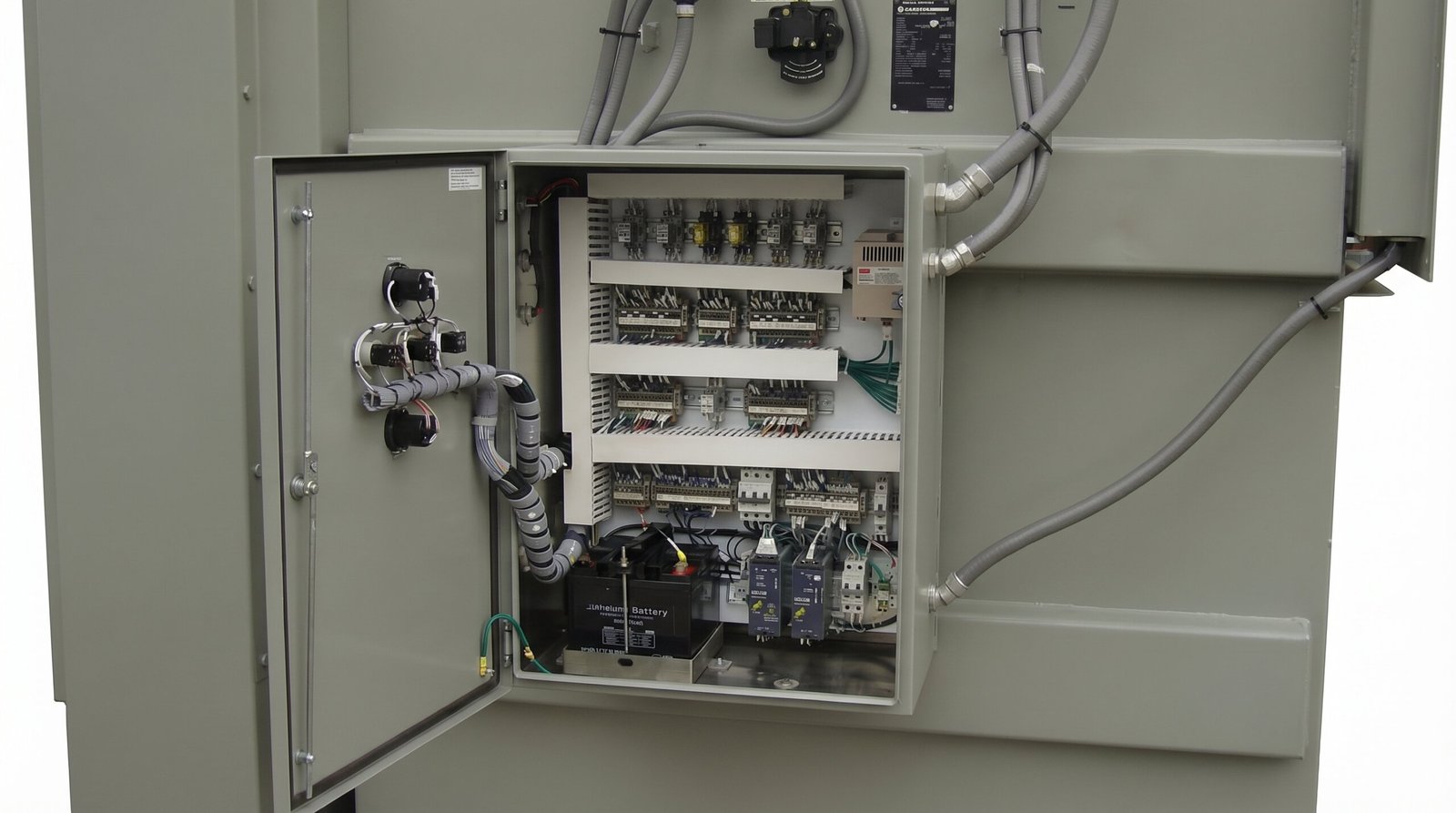
In a large transformer failure, the damage is visible and often dramatic. The cause — and the question of who bears responsibility for it — almost always runs through the transformer’s protection system. The differential relay sits at the centre of that determination.
A transformer failure is never just about the transformer
Power transformer failures in utility substations, data centers, solar farms, BESS or wind generation facilities generate some of the most complex and consequential property loss claims in the industrial insurance market. The physical damage is often severe: oil fires, tank ruptures, arc blast damage to adjacent switchgear, and business interruption measured in days, weeks, or months. Replacement lead times for large transformers now stretch to two to four years in the current supply environment, making the consequential loss exposure significant.
But the damage visible on site answers only one question: what happened. For insurance adjusters, subrogation counsel, and law firms, the decisive questions are different: why did it happen, who or what caused it, and could it have been prevented?
The answers to all three almost always run through the transformer’s electrical protection system — and specifically through the record produced by the protection relays. And the gap between what that record contains and what most investigations extract from it is, in our experience, wide.
What the 87T differential relay is — and what it records
The transformer differential relay — designated ANSI 87T in North American practice — is the primary protection device for utility-grade and large medium-voltage (MV) power transformers. Its fundamental job is to continuously monitor the current entering and leaving the transformer, and trip both circuit breakers the moment that the balance is disrupted by more than a defined threshold. In a correctly operating system, an internal fault is cleared within one to two AC cycles — under 33 milliseconds at 60 Hz.
Modern differential relays are not electromechanical trip devices. They are intelligent electronic devices (IEDs) — microprocessor-based instruments that sample waveforms at high resolution, apply real-time signal processing, log every alarm and operation with millisecond timestamps, and store oscillographic records of the electrical events surrounding any protection operation.
Extracting and correctly interpreting that record requires expertise specific to protective relaying and the forensic analysis of power system faults.
Where the file actually turns
The threshold determinations in transformer protection forensics are rarely the ones a file leads with. The questions that determine how a matter resolves — whether the protection system’s behaviour was correct given the conditions it faced, whether the relay record is consistent with the physical evidence, and whether the clearance timing and operating sequence align or reveal something else entirely — are questions that require the relay data, correctly interpreted, as a primary evidence stream. The relationship between those findings and the quantum of the loss is quantifiable. The responsibility for a protection failure is allocable. Neither is available from physical inspection alone.
Why scale amplifies everything
The protection forensics described above apply to any utility-grade transformer. Two sectors have significantly raised both the frequency and the complexity of these investigations in recent years — and both are areas where Mission Critical Forensics maintains focused expertise.
AI hyperscale data centers
A hyperscale AI campus today deploys dozens to hundreds of individual MV distribution transformers, each with its own protection relay suite. The business interruption component of a transformer failure in this environment — AI training runs interrupted mid-cycle; GPU compute time lost without checkpoint recovery — is disproportionately large relative to the property loss alone. Forensic investigation in this supercritical environment requires an investigator who understands both the protection engineering and the data center operational context in which the failure occurred.
Utility-scale renewable energy
BESS, Solar photovoltaic (PV) and wind generation facilities deploy multiple step-up transformers that operate in remote, often unstaffed locations with extended maintenance intervals. They also carry non-sinusoidal load currents generated by inverters — load characteristics that interact with differential relay behaviour in ways that conventional protection specifications do not anticipate. We have investigated transformer losses at utility-scale solar facilities, where the protection scheme must be calibrated accordingly, for which the root cause of failure cannot be identified solely through physical inspection.
What a Mission Critical Forensics investigation delivers
We are retained by insurance adjusters, subrogation counsel, and law firms on transformer failure matters where the protection system’s role in the loss is in question. Our findings are structured for the purposes of those proceedings — not for internal engineering improvement, but for defensible, evidence-based determination of cause, responsibility, and quantum.
- Cause and protection adequacy determination: An evidence-based engineering conclusion on the origin of the loss and whether the protection scheme met the standard of care applicable to the transformer class, the facility type, and the installation context. Without this determination, the full liability picture is incomplete.
- Protection system performance opinion: A professional engineering opinion prepared for proceedings — examining the relay scheme against the requirements of IEEE C37.91, CSA, and applicable facility-type standards. This opinion establishes the technical foundation on which protection-related subrogation claims are built or defended.
- Incremental damage analysis: A quantified engineering analysis of the relationship between the protection system’s behaviour and the extent of the loss — distinct from the damage the initiating event alone would have produced. This is the calculation that determines whether the full loss is absorbed or whether a portion of it is recoverable against a responsible party.
- Liability allocation findings: Identification of responsible parties across the protection chain, with the evidentiary basis for each finding. The range of potentially liable parties in these matters is broader than most files initially assume.
- Expert witness support: Court-ready reporting and testimony consistent with IEEE, CSA, ASTM, and IEC standards, structured for insurance adjustment, arbitration, and litigation proceedings, and written to hold under cross-examination.
The relay record does not lie — but it must be read correctly
The 87T relay record is objective. It does not advocate, it does not assign blame, and it does not fill gaps with assumptions. But it is dense, technical, and the findings it produces are not accessible through physical inspection, desk review, or general electrical engineering expertise alone.
The claims that resolve correctly — where subrogation is recovered, where third-party liability is established, where expert opinion holds under cross-examination — are the ones where the relay record was treated as a primary evidence stream from the outset.
Transformer protection forensics is a specialty within a specialty. It requires fluency in protective relaying design, current transformer circuit analysis, power system fault behaviour, and the applicable engineering standards — applied through a forensic investigation framework that preserves evidence integrity and produces findings structured for legal and insurance proceedings. That combination is what Mission Critical Forensics brings to these files.
Retained on a transformer loss?
Contact Mission Critical Forensics to discuss your matter with a forensic engineer. We mobilize quickly, preserve evidence to forensic standards, and provide findings structured for insurance and legal proceedings.
Standards and references: IEEE C37.91-2008, Guide for Protective Relay Applications to Power Transformers; IEEE C57.152, Guide for Diagnostic Field Testing of Fluid-Filled Power Transformers, Regulators, and Reactors; IEC 60255-151, Measuring Relays and Protection Equipment; NETA MTS-2019, Maintenance Testing Specification for Electrical Power Equipment and Systems; IEEE 493 (Gold Book), Recommended Practice for the Design of Reliable Industrial and Commercial Power Systems. Mission Critical Forensics investigations are conducted in accordance with applicable IEEE, ASTM, and CSA standards. Findings are presented in formats consistent with requirements for insurance adjustment, subrogation proceedings, and expert witness testimony.