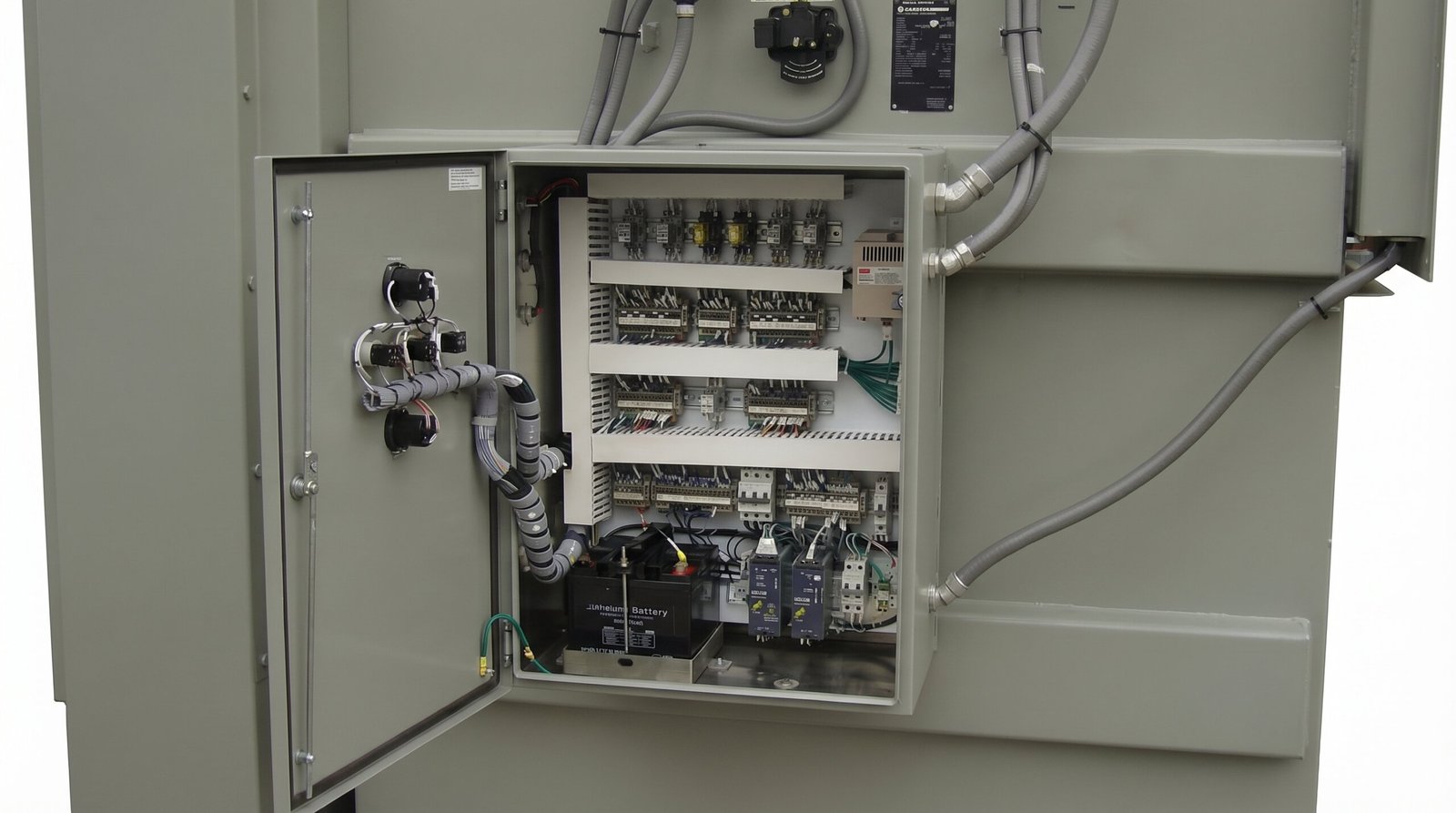
A newly constructed building is 18 months into its service life. Suddenly, a 400-ton HVAC chiller seizes, or the main electrical switchboard fails, causing a critical shutdown.
When new, high-value equipment fails, it is not a “wear and tear” event. In reliability engineering, this is an “infant mortality” failure, a premature breakdown that almost always stems from a latent defect in the product’s design, manufacturing, or installation.
For the property owner, contractor, and insurance adjuster, this failure triggers an immediate and complex financial dispute. The central conflict lies at the intersection of two different protection products: the Construction Warranty and the owner’s Equipment Breakdown (EB) Insurance. Resolving who pays depends entirely on determining the scientific root cause of the failure.
The Liability Impasse: Two Policies with Conflicting Exclusions
The primary source of dispute is that in an early-life failure, each policy is designed with exclusions that point directly at the other.
1. The Construction Warranty (The Builder’s/Manufacturer’s Promise)
This is the builder’s and manufacturer’s guarantee that their work, materials, and equipment are free from defects. In Ontario, this may be the standard one-year CCDC warranty or the two-year Tarion warranty covering a new home’s electrical and heating systems.
- What it Covers: Defects in materials and workmanship.
- The Critical Exclusion: Warranties are not all-risk policies. They almost always exclude failures caused by external factors (like power surges), operator error, or—most importantly—improper installation.
2. Equipment Breakdown (EB) Insurance (The Owner’s Policy)
This is the owner’s first-party insurance, designed to protect against operational risk. It covers internal failures that standard property insurance excludes, such as “sudden and accidental” breakdowns, mechanical seizures, motor burnouts, and electrical arcing.
- What it Covers: Sudden, accidental, internal breakdowns.
- The Critical Exclusion: EB policies are not maintenance plans. They exclude gradual wear and tear and—critically—any loss or damage that is covered by a manufacturer’s or installer’s warranty.
This creates a liability impasse. The warranty holder, suspecting an installation error, denies the claim, directing the owner to their EB insurer. The EB insurer’s investigation then concludes the failure is a direct result of an “installation defect,” which should have been covered by the warranty, and denies the claim based on the warranty exclusion.
A Clear Example: The HVAC Compressor Failure
The root cause is the only factor that can break this impasse. Let’s use the example of a failed HVAC compressor.
- Scenario 1: The EB Insurance Claim
A utility transformer failure sends a high-voltage surge into the building, destroying the compressor’s motor. This is a classic “sudden and accidental” external event. The manufacturer’s warranty will not cover it. This loss falls squarely on the owner’s Equipment Breakdown (EB) Insurance.
- Scenario 2: The Construction Warranty Claim
The compressor seizes. A forensic analysis of the refrigerant and oil reveals high levels of moisture and acid. This is definitive, physical proof that the installer failed to follow proper commissioning procedures (e.g., pulling a deep vacuum), trapping contaminants that corroded the compressor from the inside. This is an installation defect, and the claim is the responsibility of the Construction Warranty.
- Scenario 3: The Manufacturing Defect (A Deeper Warranty Claim)
The compressor seizes. A metallurgical analysis of the internal bearings reveals they were made of a substandard alloy that was destined to fail. This is a “manufacturing defect.” For the property owner, the claim is still against the Construction Warranty. Their contract is with the General Contractor, who is responsible for all supplied materials. The GC must honor the warranty and then pursue their own “pass-through” claim against the manufacturer or supplier.
The Critical Role of Forensic Engineering in Resolving Complexity
In each scenario, the responsible party (the insurer, the contractor, the manufacturer) has a defensible position based on their initial assessment. This is where the process becomes complex and adversarial.
The only way to assign financial responsibility definitively is to move beyond opinion and establish the scientific, objective root cause. This is the precise role of the forensic engineer.
A forensic engineer is retained as an independent, unbiased third party to determine why the failure occurred. Their investigation is a systematic, multi-step process:
- Document and Data Review: The engineer begins by comparing the “as-designed” engineering drawings against the “as-built” contractor shop drawings and, most critically, the “as-commissioned” testing and startup reports. Often, a missing or “pencil-whipped” commissioning report is the first sign of an installation error.
- Site Examination and Evidence Collection: The engineer conducts a meticulous, hands-on examination of the failed equipment and the surrounding system, documenting the failure mode and collecting key artifacts for analysis.
- Laboratory Analysis: This is where objective proof is found.
- In a catastrophic electrical switchboard failure, the parties may dispute a “manufacturing defect” (faulty breaker) versus an “installation error” (improperly torqued bolts or a code-violating bond). A forensic metallurgical analysis or a detailed circuit analysis provides the definitive answer.
- In the HVAC compressor failure, a chemical analysis of the oil and refrigerant provides a “blood test” for the system. Finding high levels of acid and moisture is irrefutable evidence of an installation error, “murdering” the compressor over time.
The forensic engineer’s report synthesizes these facts into a clear, evidence-based conclusion that links the physical evidence directly to the root cause.
This report is the definitive tool that breaks the liability impasse. For an insurance adjuster, it provides the objective evidence required to validate a claim or, more importantly, to successfully pursue a subrogation action against the liable party. For a property owner or contractor, it ends the dispute by assigning financial responsibility based on scientific fact, not speculation.
Resolving these complex, multi-party disputes requires a specialized forensic engineering partner capable of delivering this level of scientific certainty. For a definitive, evidence-based solution, contact MCF.